Redesigning the pharmacy procurement experience to reduce operational friction, improve scalability, and help pharmacies order independently without relying on sales representatives.
At this stage, I moved from defining what needed to be solved to deciding how the system should actually evolve.
The solution was not treated as a single feature update, but as a set of connected improvements aimed at reshaping how users interact with the marketplace from discovery to checkout.
The core direction was to design for speed, repetition, and operational efficiency rather than exploration-heavy browsing.
UI / Design System Direction
To support consistency across the redesigned experience, I introduced a more structured UI approach that aligned with e-commerce expectations while still fitting the operational nature of pharmacy procurement.
Key considerations included:
Creating a clearer visual hierarchy for product discovery
Standardizing components for order management and tracking
Improving spacing and readability for faster scanning
Ensuring interface consistency across marketplace and order flows
This helped reduce cognitive load and made the system feel more predictable and easier to navigate.


Each design decision directly mapped back to the problems identified earlier.
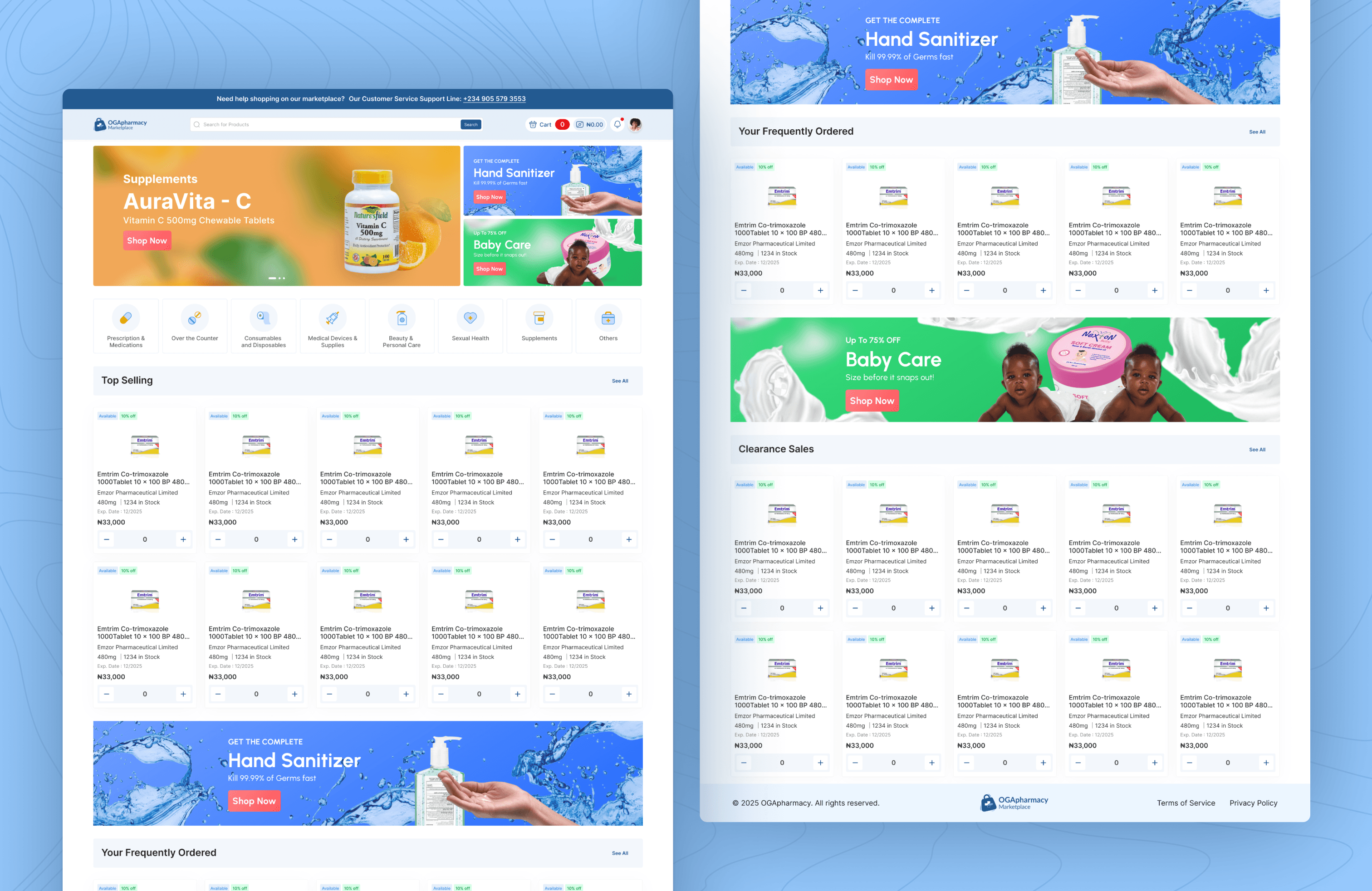
Marketplace Redesign (Product Discovery)
Users now land directly on the marketplace instead of the manage orders page.
Product Categorization Introduced to improve speed and discovery:
Top-selling products, Frequently Ordered, Clearance Sales, All Product Categories for easy sorting "See More" buttons added to prevent clutter while improving visibility.
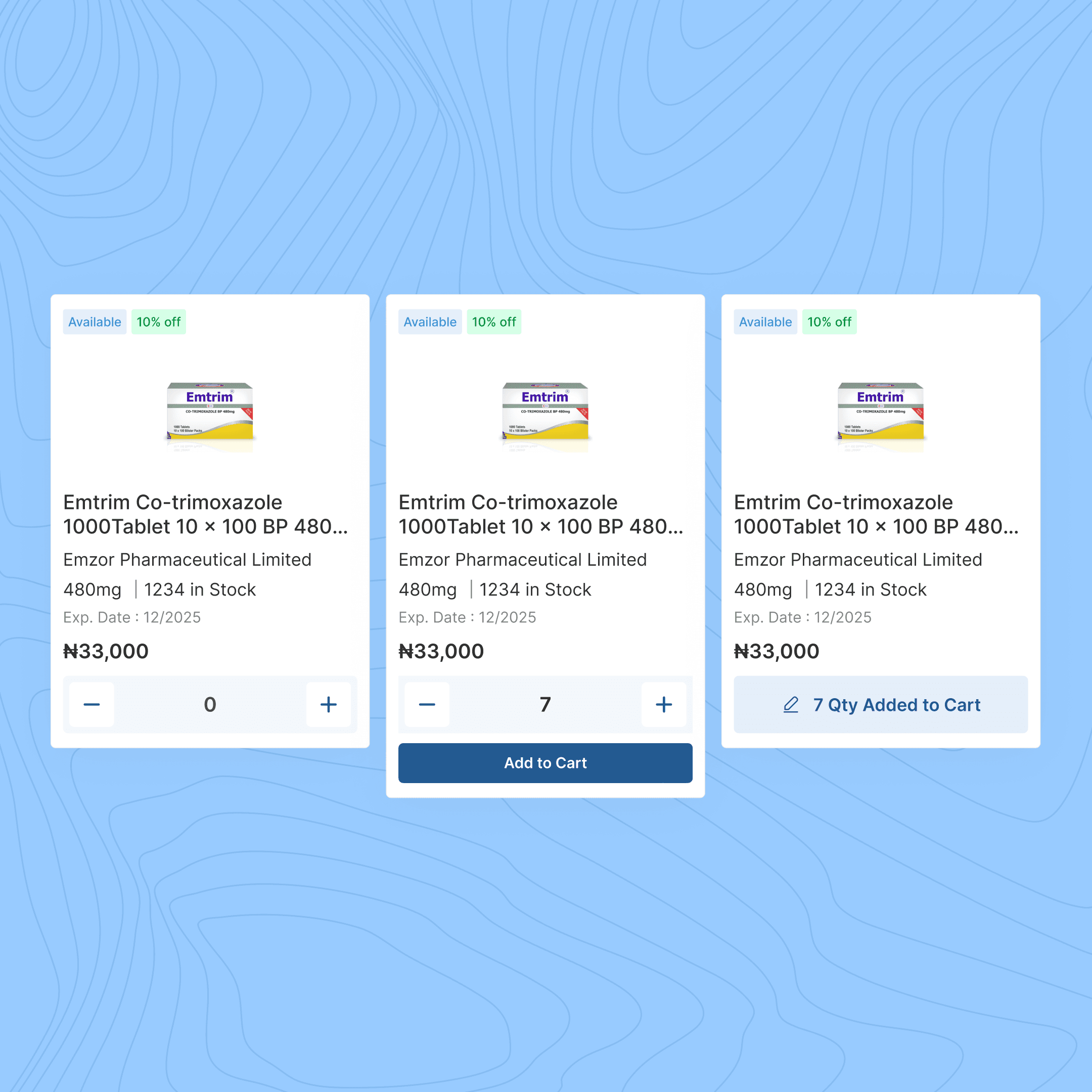
B. Product Card Revamp
Font changed from Montserrat to Inter for a more marketplace-friendly look.
Layout & tag design improved for better readability and a clean, modern UI.
Space Management: the former card had alot unnecessary spacings, and that was adjusted and made better and neater on the new design.
C. Product Details Page
Space management optimized for a better visual hierarchy.
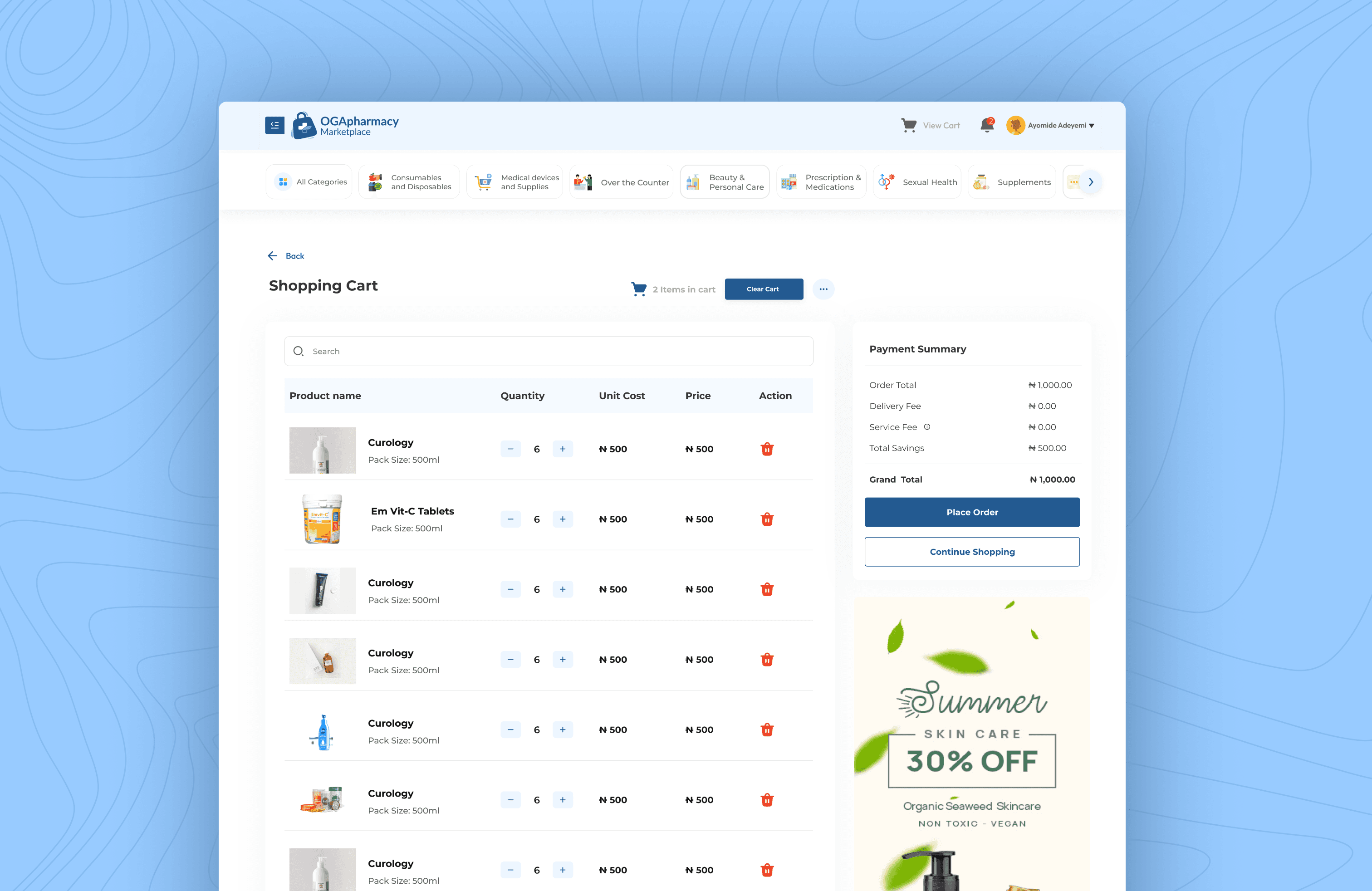
D. Cart & Checkout Experience
Sorting Features Added:
All Products, Available, Quote Request Users can now filter products in their cart for better decision-making.
E. Order Management & Re-ordering
Layout optimized to remove unnecessary spaces.
Re-order button made more visible (previously hidden in an ellipsis menu).
Faster re-ordering = better user experience & potential sales increase.


F. Tracking Module Update
Revamped tracking interface for a more aesthetically pleasing and user-friendly experience.


G. Navigation & Rerouting
Old side menu removed to adopt a modern website-style navigation approach.
Navigation restructured for better usability.


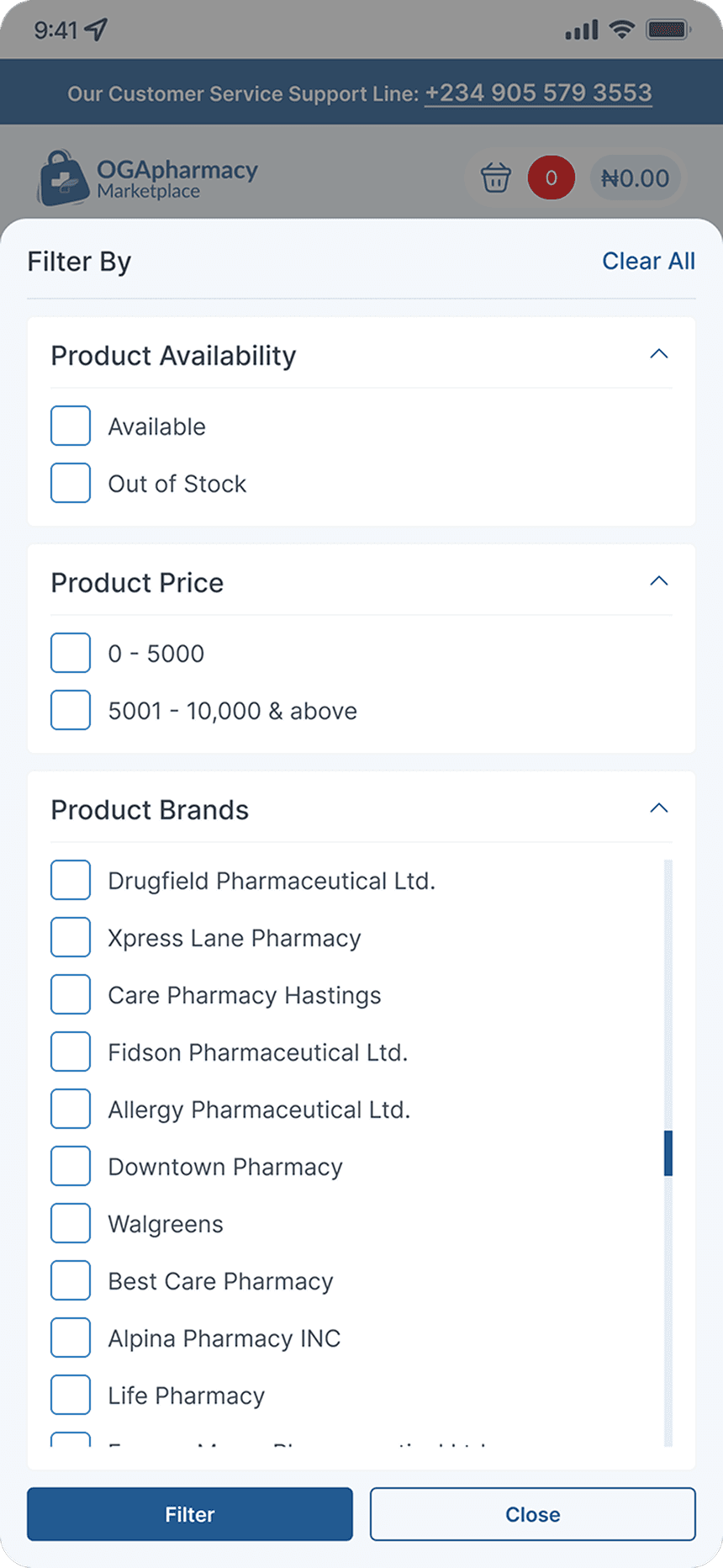
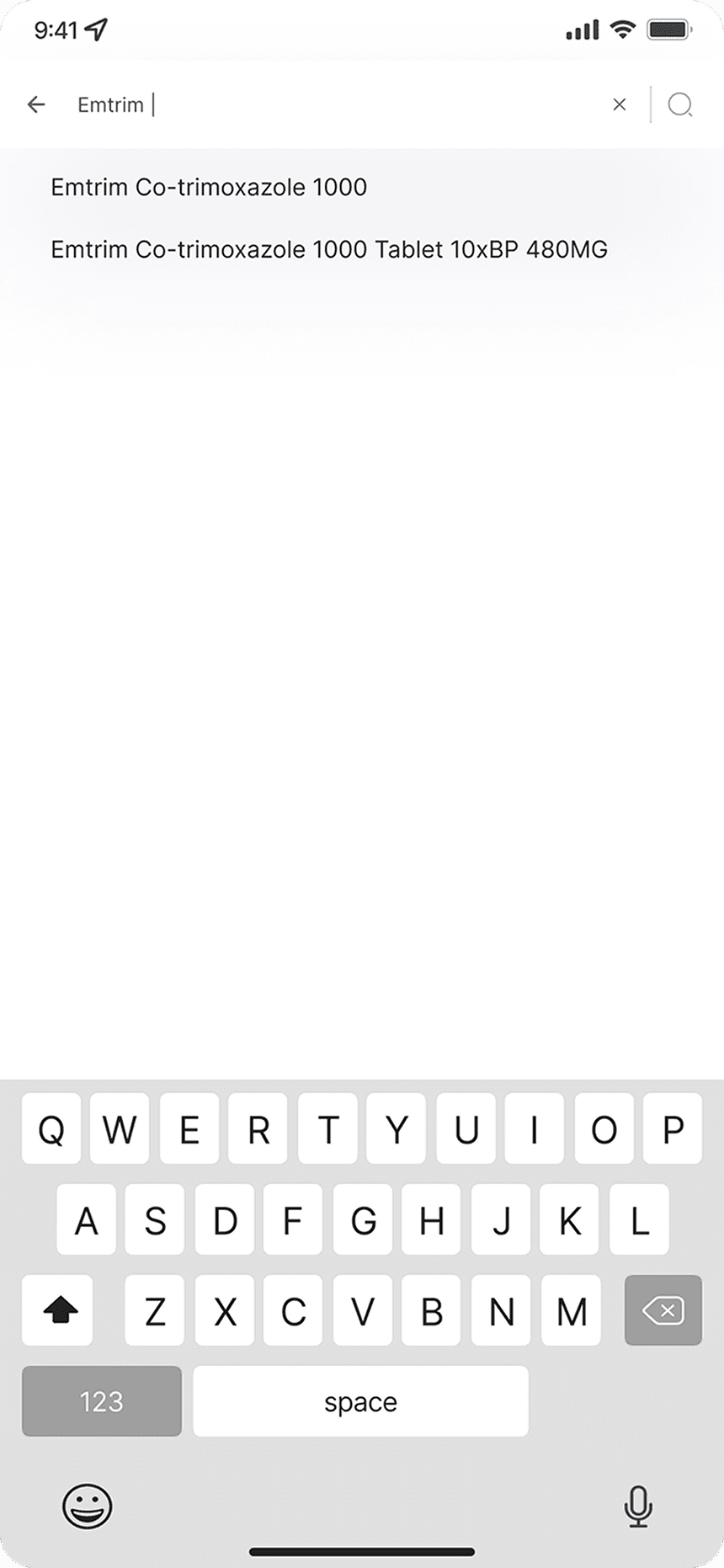
H. Mobile Screens
Mobile-first approach introduced to help users without laptop access.
Touch-friendly UI improvements for a better mobile experience.
Consistent design across desktop & mobile.




Challenges & Tradeoffs
Several constraints influenced the redesign process.
One challenge was balancing simplicity with the operational complexity of pharmacy procurement workflows.
Another challenge was improving speed without removing important information users relied on.
There was also the challenge of adapting a primarily desktop-oriented system into an experience that worked effectively across mobile environments.
One of the most important tradeoffs involved prioritizing efficiency over feature density.
Instead of adding more functionality into already complex flows, I focused on reducing friction and supporting the behaviors users performed most frequently.
Results & Impact
After the redesign was implemented, the marketplace experience became significantly more intuitive, scalable, and operationally efficient.
The most important shift was behavioral.
Pharmacies and affiliates were now able to place orders independently without relying heavily on sales representatives.
This transformed the platform from an assisted procurement process into a more scalable self-service ordering system.
Key outcomes included:
Pharmacies became more confident placing orders independently
Reduced operational dependency on internal sales personnel
Faster order placement due to reduced interaction steps
Improved repeat purchasing behavior among active users
Better product discovery through structured categorization
Improved accessibility across mobile and lower-spec devices
More consistent procurement behavior across affiliates
Improved efficiency in navigating and tracking orders
In active usage segments, repeat purchases increased significantly after the redesign, reinforcing the impact of reducing friction in high-frequency procurement behavior.
Reflection / Lessons Learned
This project reinforced the importance of designing for real-world operational behavior rather than idealized user journeys.
Key lessons included:
Users prioritize speed and familiarity over exploration in operational systems
Real-world field research reveals constraints that are not visible in interface reviews alone
Performance and device limitations are critical parts of accessibility
Small workflow improvements can create significant operational impact
Self-service adoption is often more about reducing friction than adding features
Most importantly, this project taught me that good product design is not only about making systems look better, it is about helping users perform critical tasks more confidently and independently.
Closing Reflection
This project was more than a marketplace redesign.
It was an operational transformation focused on reducing friction, improving accessibility, and enabling pharmacies to confidently manage procurement independently.
By combining field research, product thinking, systems design, and behavioral insights, the redesign helped shift the platform toward a faster, more scalable, and more self-sufficient procurement experience.